The First Meeting of the US Cabinet in 1791: A Historic Moment in American Politics
The first meeting of the US Cabinet in 1791 was an important milestone in the development of American government.
Held on 26 November 1791 under the leadership of President George Washington, this historic gathering established the foundations of the presidential Cabinet system that continues to play a vital role in the United States government today. Bringing together four of Washington’s most trusted advisers, the meeting marked a significant step towards creating a more organised and effective executive branch.
Why was the first US cabinet meeting held?
When George Washington became the first President of the United States in 1789, the newly established federal government faced numerous political, economic and diplomatic challenges. The American Constitution had created the presidency and several executive departments, but it did not specifically establish a Cabinet or require the president to consult a formal group of advisers.
Initially, Washington relied on written advice and individual discussions with his department secretaries. However, as the responsibilities of the presidency increased, he recognised the importance of bringing his senior officials together to discuss important national issues.
The first full presidential Cabinet meeting took place on 26 November 1791 in Philadelphia, which was then the capital of the United States. It represented a major development in the way the president could seek advice, consider different viewpoints and make important decisions.
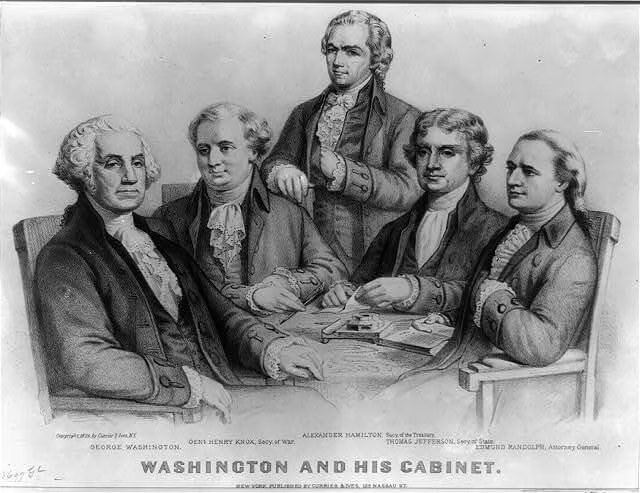
Who attended the first cabinet meeting in 1791?
Four prominent figures attended the historic meeting alongside President George Washington. Each had an important responsibility within the early American government.
Thomas Jefferson – Secretary of State
Thomas Jefferson was responsible for foreign affairs and diplomatic relationships with other countries. His experience and understanding of international politics made him an important adviser to Washington.
Alexander Hamilton – Secretary of the Treasury
Alexander Hamilton played a central role in establishing America’s financial system. As Treasury Secretary, he was responsible for government finances, national debt and economic development.
Henry Knox – Secretary of War
Henry Knox oversaw military affairs and national defence. Having served as a senior general during the American Revolutionary War, he brought considerable military experience to the administration.
Edmund Randolph – Attorney General
Edmund Randolph provided legal advice to the president and helped address important constitutional and governmental questions. He was the first Attorney General of the United States.
Together, these four officials formed the original presidential Cabinet, bringing different areas of expertise to the country’s developing executive government.
What was discussed at the November 1791 meeting?
One of the main purposes of the first Cabinet meeting was to discuss America’s economic and diplomatic relationships with France, Great Britain and Spain.
The United States was still a relatively young nation, and maintaining peaceful relationships with powerful European countries was essential to its future prosperity and security.
Trade, international diplomacy and the country’s position in an increasingly complicated international environment were important concerns for Washington and his advisers.
By bringing his senior officials together, Washington could hear different perspectives and consider the wider implications of government decisions. Rather than relying entirely on individual recommendations, he could encourage discussion between the people responsible for different areas of national administration.
The importance of George Washington’s first cabinet
The first US Cabinet meeting was significant because it established a tradition of presidential consultation and collective advice.
Although the Cabinet was not formally established by the Constitution, Washington recognised that a president needed experienced advisers to help manage the responsibilities of national leadership.
The early Cabinet also demonstrated that government decisions often required cooperation between different departments. Finance, foreign policy, defence and legal affairs were closely connected, making communication between senior officials increasingly important.
The Cabinet system developed further during Washington’s presidency, particularly in 1793, when international tensions involving France and Great Britain made regular consultations increasingly necessary.
The lasting legacy of the first cabinet meeting
The first meeting of the US Cabinet in 1791 helped shape the modern American presidency. What began as a practical arrangement created by George Washington eventually became one of the most recognisable features of the federal government.
Today, the presidential Cabinet includes the heads of major executive departments, including the Departments of State, Treasury and Defense, alongside other senior officials appointed to advise the president.
Washington’s decision to bring his principal advisers together established an important precedent for future presidents. His approach demonstrated the value of experience, cooperation and informed decision-making in national leadership.
More than two centuries later, the historic meeting of 26 November 1791 remains an important moment in American political history. It marked the beginning of a presidential advisory tradition that continues to influence how the United States government operates.
Blog Latest
-

The First Meeting of the US Cabinet in 1791: A Historic Moment in American Politics
4 November 2026
-

Less talk, more impact: Building a culture of efficient meetings
21 October 2026
-

Nelson’s last meeting before the Battle of Trafalgar
20 October 2026
-

Collaboration vs conversation: Understanding the purpose of every meeting
2 October 2026