When Ricky Hatton met Manny Pacquiao
The boxing world is mourning the loss of one of Britain’s most beloved fighters. Ricky Hatton, known affectionately as The Hitman, died at the age of 46, leaving an indelible mark on his family, friends, fans and fellow boxers alike.
Remembered as the People’s Champion, he was an approachable “everyman” who stayed true to his roots, becoming one of the most popular and beloved boxers in Britain for his relatability and fierce loyalty to his community and birthplace of Manchester. More than just a boxer, Hatton was adored for his grit, heart and down-to-earth character.
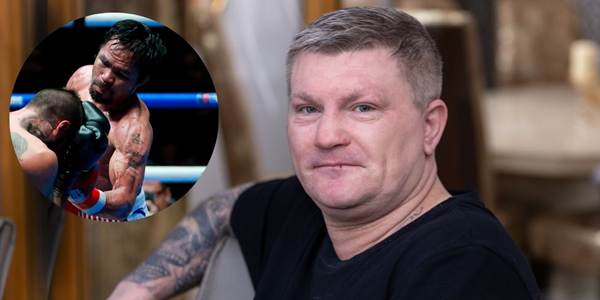
As memories of his distinguished career are relived in the press, it’s impossible not to revisit one of the most defining nights of his career: Ricky Hatton vs Manny Pacquiao on 2nd May 2009. This was a memorable clash of truly elite fighters, a meeting of two icons at a critical point in their careers. For Hatton, it was a fight that changed everything.
The Hitman and the PacMan: a clash of Titans
Before their fight, Ricky Hatton and Manny Pacquiao were already boxing giants. Hatton, born in Stockport in 1978, rose from humble beginnings in Greater Manchester to become a two-division world champion. Known for his relentless body punching, aggressive style, and loyal fan base, he was once considered the face of British boxing.
His biggest moment came in June 2005, when he upset Kostya Tszyu in an 11-round battle, winning the IBF and The Ring light welterweight titles in front of a raucous Manchester crowd. That fight, according to sports historian Steve Bunce, changed British boxing and elevated Hatton to national hero status.
Pacquiao, meanwhile, had forged a legendary path. Hailing from the Philippines, he was already a six-division world champion by 2009 and on track to become the only eight-division champion in history. With lightning fast hand speed, knockout power, and a warrior’s heart, PacMan had defeated elite opponents like Marco Antonio Barrera, Erik Morales, and Oscar De La Hoya by the time he met Hatton.
When did they first cross paths?
Hatton and Pacquiao first met at a press event before their 2009 mega fight. Their encounter was professional, respectful, and surprisingly friendly, filled with mutual admiration and competitive fire. The bout was set for the MGM Grand in Las Vegas, and anticipation was electric, as it would unify light welterweight supremacy and determine who was truly among the best.
Ricky Hatton vs Pacquiao turned out to be a fight that shook the boxing world. Fans expected a war in the ring, and they witnessed one of boxing’s most brutal KOs. The fight started fast—some said too fast for Hatton, who was used to being in control. Within the opening minutes of the first round, Hatton was floored twice by Pacquiao’s blistering combinations. He struggled to find rhythm or timing, and his famed toughness wasn’t enough to withstand the Filipino’s speed and precision.
Then came the second round. A booming left hand from Pacquiao landed clean, and Hatton collapsed instantly. Fans were shocked as he appeared motionless on the canvas; the referee didn’t even need to count. The KO was so devastating that Hatton later admitted, “Manny Pacquiao hit me so hard, I can’t even remember it,” reflecting on the moment that ended not just the fight, but effectively, his peak years in the sport.
Life-changing experience
This wasn’t just another Ricky Hatton fight; it was the one that changed him. The Pacquiao KO wasn’t simply about losing, it was about confronting a limit no fighter wants to face: the moment when their heart and spirit are no longer enough.
Physically, at 31, Hatton had absorbed hard punches before. He had endured punishment against the likes of Luis Collazo, and had faced Floyd Mayweather Jnr in 2007, when he also suffered a knockout. The difference with Manny Pacquiao was the concussive force of the KO, combined with a sense that Hatton’s best days were perhaps behind him.
Mentally, the blow cut deeper. The loss led to a long struggle with depression and low self-worth. Hatton spoke openly in later years about the dark places he went to after that fight. He admitted it was a downward spiral that almost cost him his life more than once.
Ricky Hatton’s trainer at the time, Floyd Mayweather Snr, had spoken of Hatton’s defensive lapses during training camp. It only added to the confusion and sense of regret in the aftermath. Regardless of tactical preparation, Pacquiao’s power that night ended with a perfect punch, delivered at the worst time for his opponent.
Fighters are rarely beaten by power alone. They are broken by what the power symbolises; the end of their prime, the fading of sharpness, and the cruel realisation that there are newer, faster and stronger fighters coming up. For Hatton, the KO was the moment where past glories collided with a new reality that his amazing career was winding down.
He made one more attempt at a comeback in 2012 against Vyacheslav Senchenko, but the story ended in similar heartbreak – a stoppage defeat in front of a home crowd.
For Pacquiao, the Hatton fight cemented his status as a knockout champion of historic proportions. The victory was part of an incredible run that saw him dominate welterweights and become a global superstar, not just in boxing, but in politics and philanthropy. He fought professionally until 2021, retiring at 43 with 62 wins, including 39 knockouts.
Ricky Hatton’s legacy isn’t defined by the Pacquiao KO. He was a warrior who took on the best, packed arenas, and fought with everything he had. He gave British fans something they hadn’t seen in decades: a local boy with gloves of steel and a heart of gold.
What made that night in 2009 memorable wasn’t just the punch, but the respect that followed it. Pacquiao, ever humble in victory, knelt to check on Hatton after the knockout. He didn’t gloat or celebrate wildly – he understood the gravity of what had just happened.
In later interviews, Hatton never blamed Pacquiao or made excuses. He always credited the Filipino icon, even admiring the artistry of the left hook that ended his night. This humility and sportsmanship between two men who risked it all remains one of the lasting memories from their encounter.
Now, as the world says a sad farewell to Ricky Hatton, the fight with Pacquiao becomes even more poignant, not because of the loss, but because it embodied everything Hatton was: courageous, fearless, and willing to step into the ring with the very best.
From the pub cellars of Greater Manchester to the lights of Las Vegas, Hatton’s journey was one of a kind. Even in defeat, he taught us something about resilience, vulnerability and pride. Rest in peace, Ricky. The canvas may be empty now, but your footsteps in the ring echo louder than ever.
Blog Latest
-

The First Meeting of the US Cabinet in 1791: A Historic Moment in American Politics
4 November 2026
-

Less talk, more impact: Building a culture of efficient meetings
21 October 2026
-

Nelson’s last meeting before the Battle of Trafalgar
20 October 2026
-

Collaboration vs conversation: Understanding the purpose of every meeting
2 October 2026